
Menu
COST & PLANNING
How Often Should You Detail Your Car in Orange County?
How often should you detail your car. Learn the process, timing, local conditions, common mistakes, and when professional help makes sense in this practical.
Serving every city and neighborhood in Orange County, California.
By Blog Writer · approximately 14 minute read · Updated September 2026 · Topic: how often should you detail your car
Quick answer: how often should you detail your car
Many daily drivers benefit from a deeper interior-and-exterior reset a few times per year, with maintenance washes and spot care between visits. A garage-kept commuter and a beach-parking family vehicle should not follow the same calendar.
A useful answer starts with the vehicle, its condition, and the requested result. Package names alone do not describe the labor, access, or correction work involved. For how often should you detail your car, the purpose of this guide is to help you ask better questions, choose a suitable scope, and know what to inspect before accepting the result. It cannot replace the care instructions for your exact vehicle, finish, upholstery, accessory, or cleaning product.
When people search for how often should you detail your car, they often want a single number or shortcut. The responsible answer is a repeatable process: identify the surface and condition, control the work area, use compatible tools and chemistry, remove residue, allow required drying or curing, and inspect again. That process protects the vehicle and gives the customer a clearer handoff.
What changes the right answer
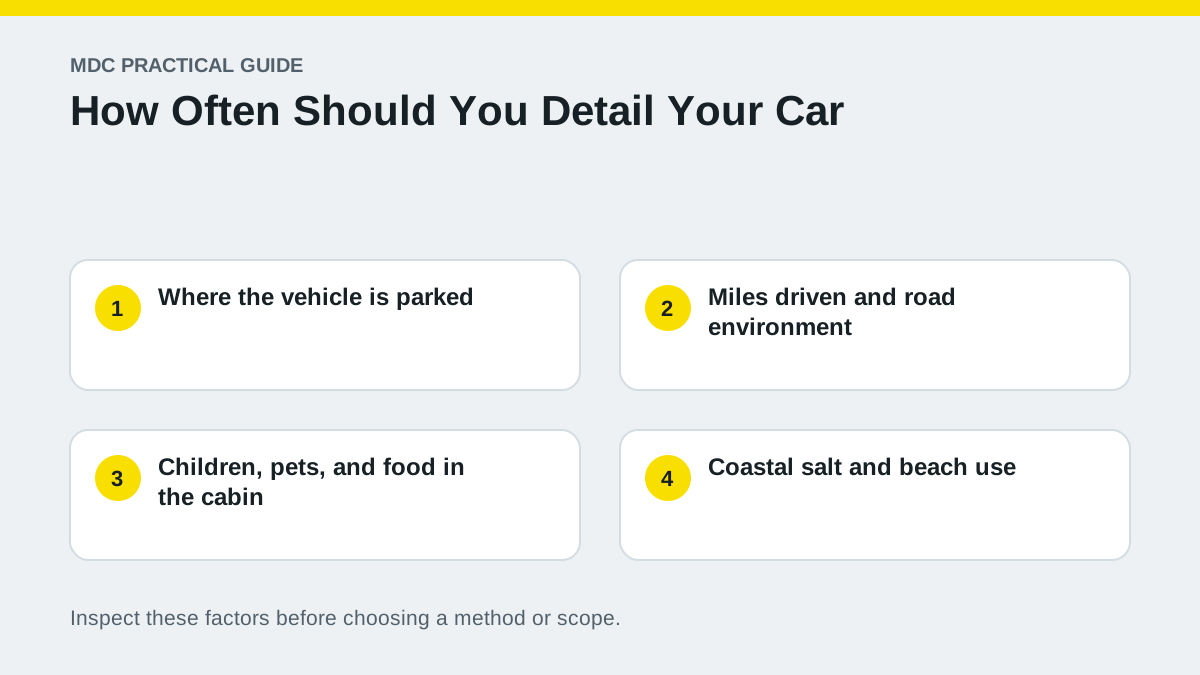
The following variables determine whether common how often should you detail your car advice is appropriate. Review them together for “How Often Should You Detail Your Car in Orange County?”; one factor can change the method even when the rest of the vehicle looks ordinary.
Where the vehicle is parked
Where the vehicle is parked. Treat this as a decision point, not a box to check. Record what you observe, compare it with the vehicle or product instructions, and choose the least aggressive suitable response. That discipline keeps how often should you detail your car guidance tied to the actual vehicle instead of a generic promise. A useful answer starts with the vehicle, its condition, and the requested result. Package names alone do not describe the labor, access, or correction work involved.
Miles driven and road environment
Miles driven and road environment. Look at this factor before tools or chemicals touch the surface. It changes the labor, the safe method, and the result that can reasonably be approved. If the condition is uncertain, pause for a concealed-area test or a professional inspection rather than increasing force.
Children, pets, and food in the cabin
Children, pets, and food in the cabin. This detail is easy to overlook, yet it often explains why two similar-looking vehicles need different plans. Confirm it in useful light, keep notes or photos when appropriate, and make the customer or technician aware of any limitation before the work proceeds.
Coastal salt and beach use
Coastal salt and beach use. The practical test is whether the chosen method removes the unwanted material without changing the surface underneath. Work in a small controlled area, inspect the towel or tool, and stop when the finish reacts differently than expected.
Paint protection already present
Paint protection already present. Build enough time for this into the appointment. Rushing tends to move contamination, leave residue, or skip drying and inspection. A clear sequence makes the result easier to verify at customer handoff and easier to maintain afterward.
Owner expectations for appearance and resale
Owner expectations for appearance and resale. Consider both the visible surface and what sits below or behind it. Moisture, foam, seams, coatings, electronics, and prior repairs may not be obvious. Material identification is part of good how often should you detail your car work, not an optional extra.
A practical step-by-step plan
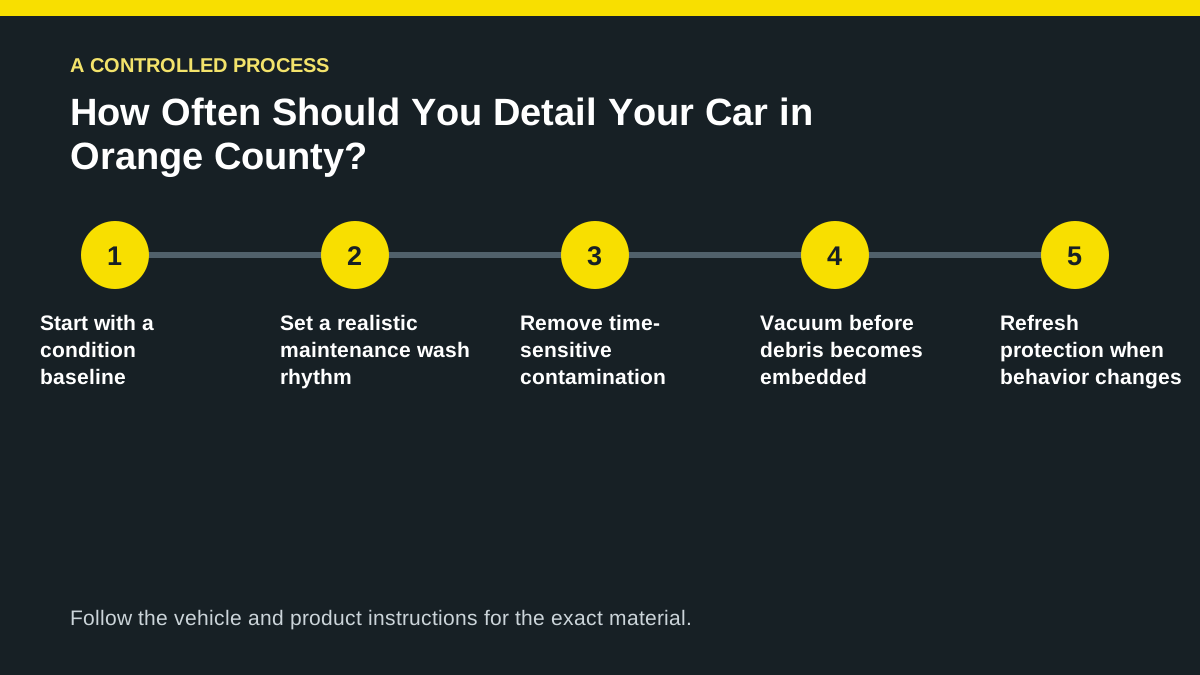
This sequence keeps how often should you detail your car work observable and reversible for as long as possible. Product labels and the vehicle owner’s manual take priority whenever they set a narrower limit.
Step 1: Start with a condition baseline
Start with a condition baseline. This detail is easy to overlook, yet it often explains why two similar-looking vehicles need different plans. Confirm it in useful light, keep notes or photos when appropriate, and make the customer or technician aware of any limitation before the work proceeds.
Step 2: Set a realistic maintenance wash rhythm
Set a realistic maintenance wash rhythm. The practical test is whether the chosen method removes the unwanted material without changing the surface underneath. Work in a small controlled area, inspect the towel or tool, and stop when the finish reacts differently than expected.
Step 3: Remove time-sensitive contamination promptly
Remove time-sensitive contamination promptly. Build enough time for this into the appointment. Rushing tends to move contamination, leave residue, or skip drying and inspection. A clear sequence makes the result easier to verify at customer handoff and easier to maintain afterward.
Step 4: Vacuum before debris becomes embedded
Vacuum before debris becomes embedded. Consider both the visible surface and what sits below or behind it. Moisture, foam, seams, coatings, electronics, and prior repairs may not be obvious. Material identification is part of good how often should you detail your car work, not an optional extra.
Step 5: Refresh protection when behavior changes
Refresh protection when behavior changes. Use the same standard on every section: inspect, test, perform the minimum effective action, remove residue, then evaluate again. That makes the process repeatable without pretending every panel, seat, lens, or vehicle is identical.
Step 6: Schedule deep work around actual use
Schedule deep work around actual use. Treat this as a decision point, not a box to check. Record what you observe, compare it with the vehicle or product instructions, and choose the least aggressive suitable response. That discipline keeps how often should you detail your car guidance tied to the actual vehicle instead of a generic promise.
Step 7: Review the plan each season
Review the plan each season. Look at this factor before tools or chemicals touch the surface. It changes the labor, the safe method, and the result that can reasonably be approved. If the condition is uncertain, pause for a concealed-area test or a professional inspection rather than increasing force.
Timing, cost, and realistic expectations
Time and price for how often should you detail your car follow scope. A lightly affected, accessible area may need a short maintenance step; an older vehicle with embedded soil, prior product residue, multiple materials, or damage needs more inspection and labor. A quote should state the selected service, vehicle class, add-ons, and agreed final amount. Duration is useful for planning the detailer’s work and the customer’s handoff, but it should not be used to rush a careful process.
Some how often should you detail your car results can be judged immediately, such as loose debris removal or a clean exterior panel. Upholstery, carpet, coatings, and odor work may need drying or cure time before the final condition is clear. Permanent dye change, coating failure, cracks, corrosion, burned paint, worn fabric, and contamination deep inside foam are not the same as removable soil. A reputable service distinguishes improvement from repair and does not guarantee an outcome before inspection.
For “How Often Should You Detail Your Car in Orange County?,” ask what is included, what is excluded, how a condition-based add-on is approved, and what happens if the technician finds damage or a material that cannot be treated safely. MDC’s booking form displays the configured service prices and selectable extras. Operations confirms the appointment and final scope so the customer and detailer share the same record.
Orange County conditions to consider
Salt air near the coast, inland dust, year-round sun, sap, pollen, freeway grime, children, pets, and outdoor parking can shorten the useful interval. Inspect the car monthly and schedule work from condition, not guilt.
Mobile how often should you detail your car work also depends on the service location. The vehicle needs a safe, lawful, accessible area with permission from the property owner or manager when required. Water, power, shade, traffic, gates, parking rules, and runoff control may affect whether the planned process can be completed there. A good booking request describes those conditions instead of leaving the technician to discover them at arrival.
Weather can change during a “How Often Should You Detail Your Car in Orange County?” appointment. Hot panels shorten product dwell time, wind moves dust across clean surfaces, coastal humidity slows fabric drying, and unexpected rain can make exterior work unsuitable. Rescheduling or adjusting a scope protects the result; it is not a reason to skip preparation, documentation, or customer approval.
Common mistakes to avoid
Most avoidable damage comes from excessive force, incompatible chemistry, cross-contaminated tools, uncontrolled moisture, or a rushed handoff. Watch for these specific errors when planning how often should you detail your car.
Waiting for every surface to look neglected
Waiting for every surface to look neglected. Build enough time for this into the appointment. Rushing tends to move contamination, leave residue, or skip drying and inspection. A clear sequence makes the result easier to verify at customer handoff and easier to maintain afterward.
Over-cleaning delicate materials
Over-cleaning delicate materials. Consider both the visible surface and what sits below or behind it. Moisture, foam, seams, coatings, electronics, and prior repairs may not be obvious. Material identification is part of good how often should you detail your car work, not an optional extra.
Using one interval for every vehicle
Using one interval for every vehicle. Use the same standard on every section: inspect, test, perform the minimum effective action, remove residue, then evaluate again. That makes the process repeatable without pretending every panel, seat, lens, or vehicle is identical.
Ignoring the owner's manual
Ignoring the owner's manual. Treat this as a decision point, not a box to check. Record what you observe, compare it with the vehicle or product instructions, and choose the least aggressive suitable response. That discipline keeps how often should you detail your car guidance tied to the actual vehicle instead of a generic promise.
Assuming a coating removes maintenance
Assuming a coating removes maintenance. Look at this factor before tools or chemicals touch the surface. It changes the labor, the safe method, and the result that can reasonably be approved. If the condition is uncertain, pause for a concealed-area test or a professional inspection rather than increasing force.
When professional help makes sense
Professional help with how often should you detail your car is useful when the vehicle has several materials, limited access, embedded contamination, uncertain prior repairs, or a result that needs documented inspection. A technician can also identify when the condition belongs with a body shop, upholstery repairer, glass specialist, electrician, mold remediator, hazardous-spill service, or another qualified trade. Saying that a surface should not be treated is sometimes the safest professional conclusion.
MDC offers mobile service throughout Orange County for requests such as “How Often Should You Detail Your Car in Orange County?.” Review the Complete Full Detailing page for the closest service match, browse the Orange County service area, or use the online booking form to choose a vehicle and see currently configured options. The submitted request is reviewed before the appointment is confirmed.
Frequently asked questions
Is detailing twice a year enough?
It can be for a lightly used, protected vehicle with good maintenance. Hard use, outdoor parking, pets, or coastal exposure may justify a shorter interval. For how often should you detail your car, use that answer as a starting point and verify the actual vehicle, material, and approved service scope.
Should I wash between details?
Yes. Appropriate maintenance washing prevents ordinary dirt from accumulating and makes the next detail more predictable. For how often should you detail your car, use that answer as a starting point and verify the actual vehicle, material, and approved service scope.
Does a new car need detailing?
A new vehicle may need careful washing, contamination inspection, and protection even when it does not need intensive correction. For how often should you detail your car, use that answer as a starting point and verify the actual vehicle, material, and approved service scope.
What is the best month to detail?
Choose a time before or after the vehicle's heaviest use; condition and weather matter more than a universal month. For how often should you detail your car, use that answer as a starting point and verify the actual vehicle, material, and approved service scope.
Suggested reading
These related MDC guides explain decisions adjacent to how often should you detail your car and use the same inspect-first approach:
Sources and care directions
Sources for this how often should you detail your car guide were reviewed September 12, 2026. External material is provided for context; product labels, current manufacturer instructions, and the manual for the exact vehicle control the work.
Request a complete detail when your vehicle needs a reset, or choose a maintenance service that matches its current condition.
For how often should you detail your car, tell us the vehicle, condition, service location, and result you want. We will review the request, confirm the scope and agreed final price, and send appointment updates as the job moves forward.